In at the Deep End – Ilse Black
This first month of this project has been spent looking through the collection, getting a feel for the main themes that capture my attention and gaining some insight into the parts of the collection which are hidden in boxes in the stores and in the locked cabinets. This has been made possible through the support of the collections team and their willingness to share their enthusiasm for their subjects of special interest.
Through conversations with the team and with the guests we have invited to come and chat with us, we have been able to piece together fragments of information and to gain insight into some of the context surrounding the photographs, images and articles we’ve encountered.
It’s been interesting to see the ongoing work behind the scenes by the volunteers in the collections team, who painstakingly go through boxes, cataloguing the archives.
I have been captivated by the story of the Heroine which was shipwrecked in 1852. The story is one of human tragedy through the loss of the brave men who died while coming to the aid of those on the sinking ship, and the broken dreams of the passengers who all survived, having had their prospect of a new life in Australia, panning for gold, sunk along with all their belongings.
The story of the Heroine relates to the development of a better equipped RNLI in Lyme Bay.
Part of the story which is not told in much detail is what happened to the ship once sunk. The theme which runs through my practice is to explore the other world which lies beneath the surface of oceans, where we are out of our element and yet drawn to it. I am curious about the diving operation which took place in the months following the disaster. The salvage operation started straight after the ship went down and was complete by May. These are the coldest and most inhospitable months in British waters.
As part of building connections, I have reached out to people who dive the wrecks around Lyme Bay, to gather their stories and to find out what is left there now. I am interested in the marine life which now colonises what is left and to explore the afterlife of the human tragedy from the perspective of the ocean.
It has been possible to find out about some of the fish population of the bay by talking to Ken Gollop whose family have lived, worked and fished in the area for generations.
Nigel Clarke too has been able to shed some light on what happens with the wrecks over time.
I will be visiting The Diving Museum in Gosport to find out more about wreck diving in the19th century.
Through connections with Seasearch I am setting up meetings to discuss the ocean environment with volunteers who have dived on the wrecks and who are interested in marine surveys of the area.
I am always interested in marine ecology and the acknowledgement and protection thereof.
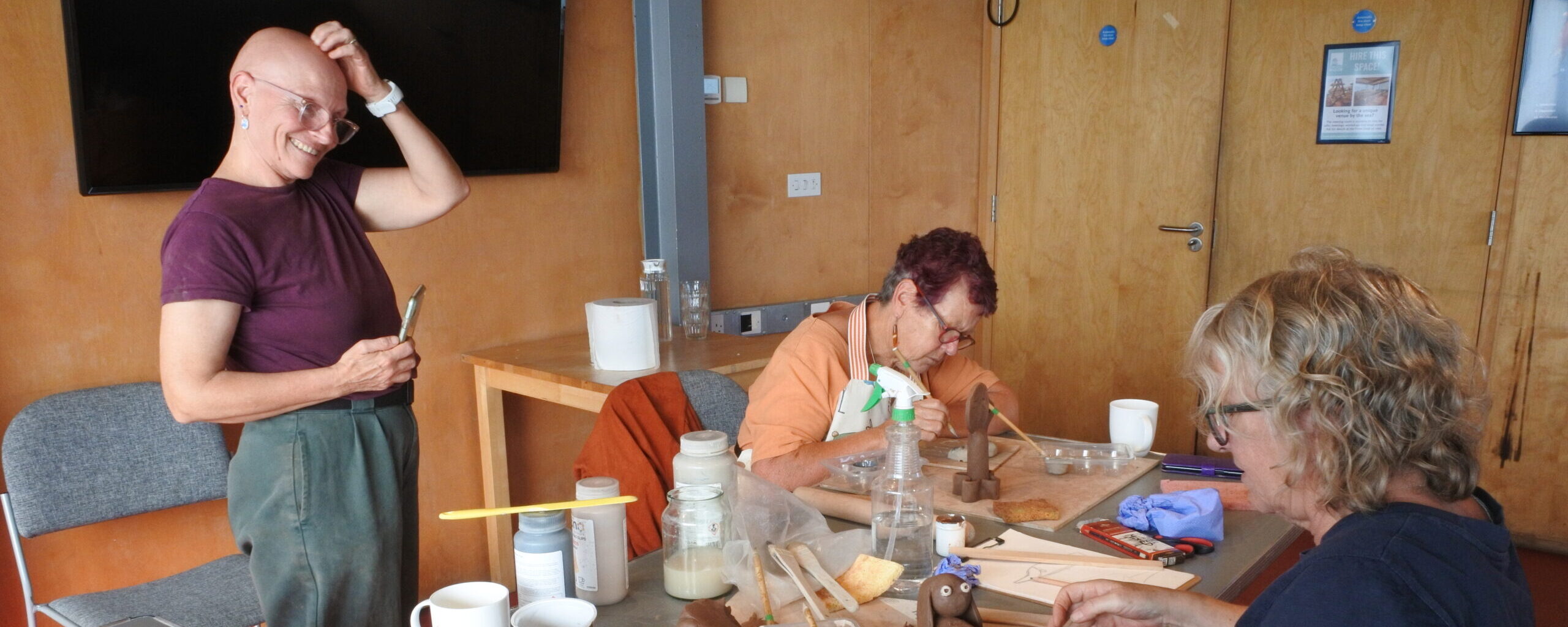
I delivered a ceramic workshop on 26 September inviting the participants to respond to the maritime section of the museum. We had a fun day with lots of conversation. As a group I think we all felt that we would like to see more artifacts to tell the stories of the area. Objects seem to offer a tangible connection to memory and story.
I am interested in seeing people’s photographs and videos of the underwater world of Lyme Bay, so if you or anyone you know has these, they would like to share, please do get in touch.
Ilse Black – Artist
To the Sea begins in September 2026. All workshops are open to members of the public – information about the residency programme and booking information is available at www.lymeregismuseum.co.uk/whats-on/tothesea. The Maritime Gallery and residency desk are free to visit with museum admission.